



Educational information only. Not medical advice.
Trying to conceive can change the way you think about products you already use for comfort.
Something that feels perfectly reasonable during an ordinary month may raise a new question once sperm compatibility and timing around ovulation matter. Coconut oil is a good example.
It is commonly used for personal care and lubrication, but that does not automatically mean every coconut oil product has been tested for use while trying to conceive.
So if you are using coconut oil for vaginal dryness, irritation after sex, or added comfort during intercourse, here is what is worth knowing.
Trying to Conceive Changes the Question
When pregnancy is the goal, lubricant choice becomes more specific.
Sperm need to remain motile enough to move through the reproductive tract. Laboratory studies have found that some common lubricants can reduce sperm movement, although the effect varies considerably between products. The American Society for Reproductive Medicine also notes an important distinction: effects seen in laboratory testing have not translated into clear evidence that lubricant use reduces the chance of conception during a menstrual cycle.
That means the takeaway should not be that lubricant use prevents pregnancy.
A more useful question is whether the product being used has actually been designed and tested with sperm compatibility in mind.
If you are actively trying to conceive and need lubrication during intercourse, a product specifically designed and tested for sperm compatibility may be the more appropriate choice. Mayo Clinic Health System similarly recommends considering sperm-friendly options rather than household oils such as coconut oil when trying to become pregnant.
Is Coconut Oil Sperm-Friendly?
There is not enough evidence to confidently describe coconut oil itself as sperm-friendly, fertility-friendly, or sperm-safe.
Research on lubricants and sperm tends to focus on specific commercial lubricants and selected oils. Different oils can behave differently in laboratory testing, which is another reason not to assume that results involving one oil automatically apply to coconut oil.
There is also no good basis for saying that coconut oil prevents conception, acts as contraception, or guarantees harm to sperm.
For someone trying to conceive, the more conservative approach is to choose a lubricant that has been specifically evaluated for sperm compatibility when lubrication is needed.
What About Coconut Oil During the Fertile Window?
The fertile window is the part of the menstrual cycle when pregnancy is possible. The American Society for Reproductive Medicine defines it as the six-day interval ending on the day of ovulation.
If you know you are within your fertile window and are actively trying to conceive, this is a reasonable time to be more selective about anything being used internally during intercourse.
That does not mean coconut oil has been proven to interfere with conception.
It means that, because coconut oil has not been established as a fertility-compatible lubricant, using a product specifically designed and tested for that purpose removes some of the uncertainty.
If you are unsure what is appropriate for you, a gynecologist, fertility specialist, or other qualified clinician can help.
What If the Issue Is Irritation After Sex?
Irritation after intercourse can have many causes, including friction, sensitivity to a product, hormonal changes, or another underlying issue.
There is also an important distinction between using something externally on the vulva for comfort and using it internally as a lubricant during intercourse.
For people trying to conceive, that distinction matters because an internally used product is more likely to come into direct contact with semen.
If irritation keeps happening, becomes painful, or comes with symptoms such as unusual discharge, odor, bleeding, persistent burning, or ongoing discomfort, consider speaking with a qualified clinician rather than continuing to experiment with different products.
Can You Use Coconut Oil During Pregnancy?
Pregnancy is a separate question from trying to conceive.
For most people with an uncomplicated pregnancy, sexual activity itself is generally considered safe unless a clinician has advised otherwise. But that does not mean every vaginal or personal-care product should automatically be considered appropriate during pregnancy.
There is not enough product-specific evidence for gina to make a general pregnancy-safety claim about internal coconut oil use.
If you are pregnant and considering using coconut oil or another vaginal product for dryness or irritation, speak with your OB-GYN or other qualified pregnancy care provider first.
That is especially important if you are experiencing pain, bleeding, unusual discharge, persistent irritation, or any other symptom that concerns you.
Where Does gina Fit?
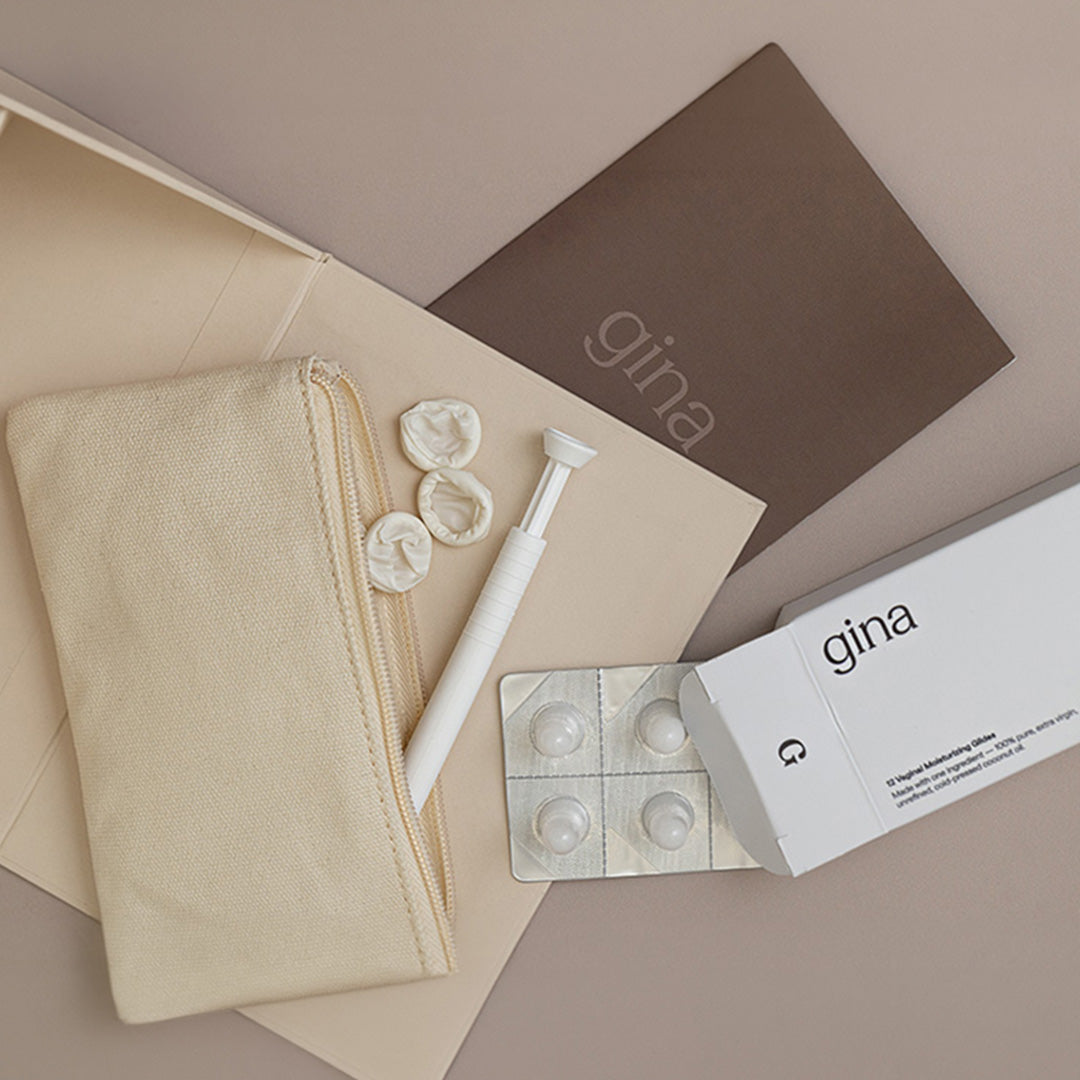
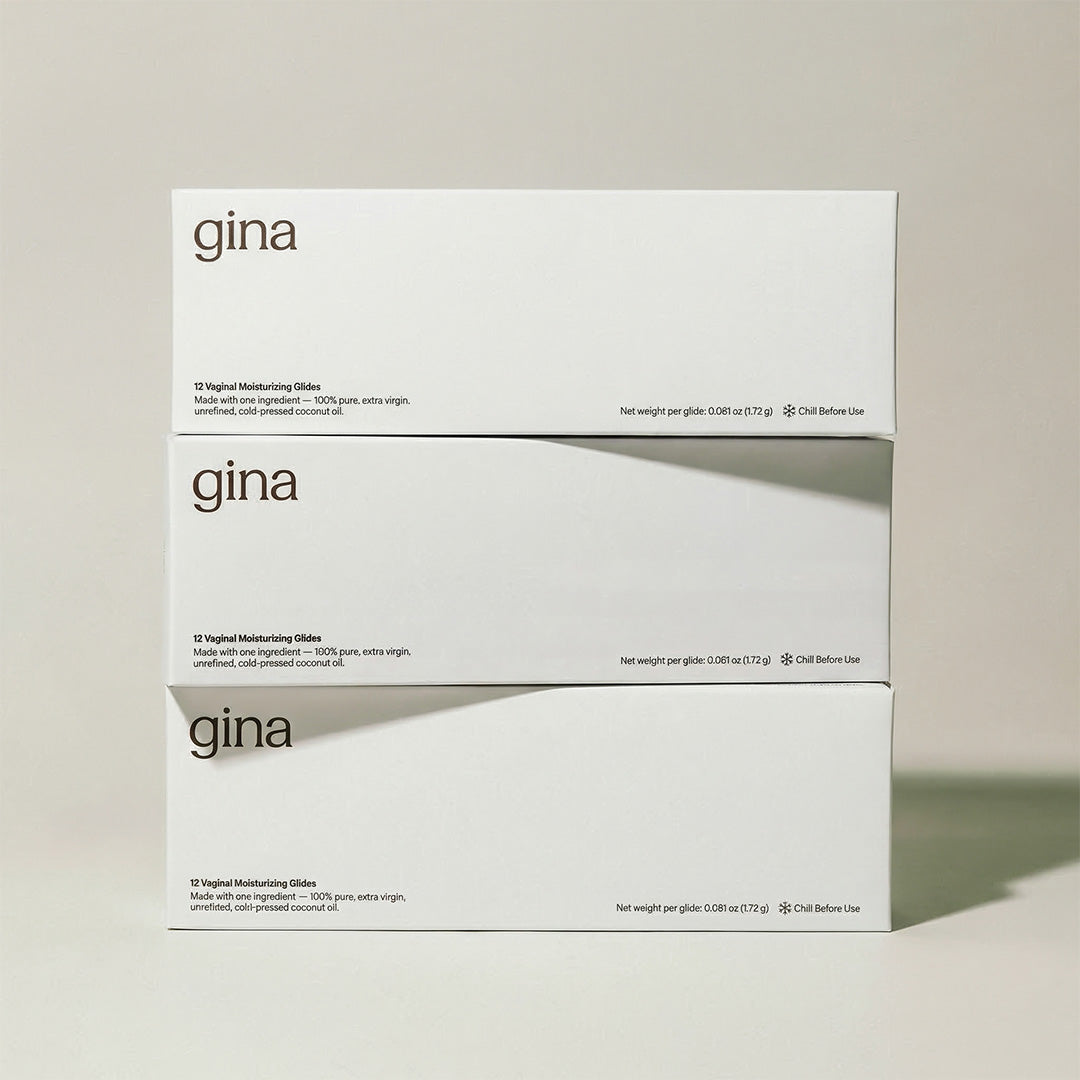
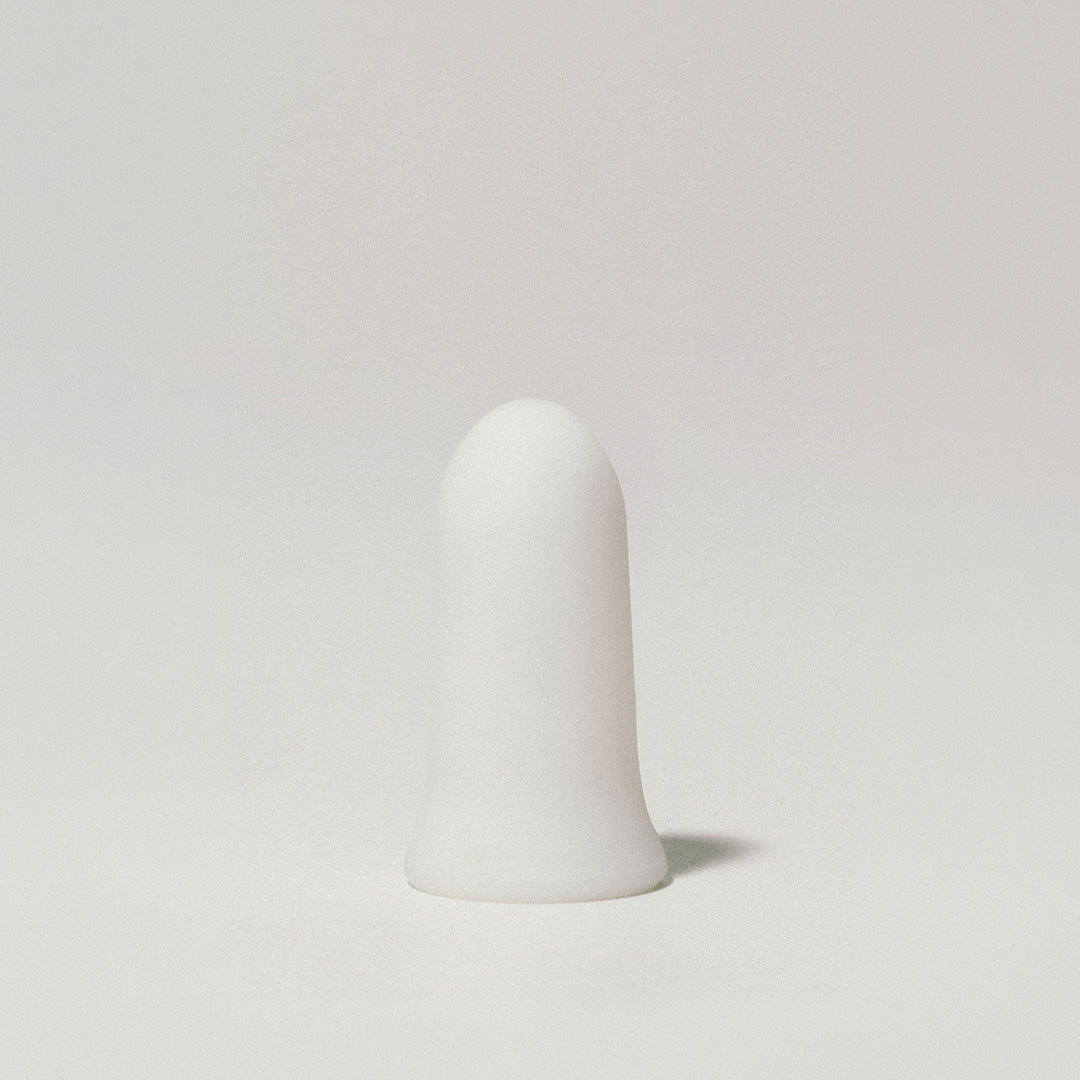
gina moisturizing glides are designed to support moisture and comfort for dryness-related discomfort in a clean, pre-measured format.
gina is not a fertility product, conception aid, sperm-compatible lubricant, or pregnancy treatment.
If you are pregnant or actively trying to conceive, speak with your healthcare provider before using gina.
If lubrication is needed specifically during conception attempts, consider a product designed and tested for sperm compatibility.
One More Thing About Coconut Oil and Condoms
Oil-based products, including coconut oil, should not be used with latex condoms.
Oil can weaken latex and increase the chance that the condom will break. ACOG recommends water-based or silicone-based lubricants when using latex condoms.
Frequently Asked Questions
Can coconut oil prevent pregnancy?
Coconut oil should not be considered contraception or a spermicide. Research showing that some lubricants affect sperm movement in laboratory conditions does not mean coconut oil reliably prevents conception.
Is coconut oil fertility-friendly?
Coconut oil has not been sufficiently established as a fertility-friendly or sperm-compatible lubricant. If you are trying to conceive and need lubrication, consider a product specifically designed and tested for sperm compatibility.
Should I avoid coconut oil during my fertile window?
There is not enough evidence to say that coconut oil prevents conception. However, because it has not been established as sperm-compatible, people actively trying to conceive may prefer a lubricant specifically tested for fertility compatibility during the fertile window.
Can I use gina while trying to conceive?
gina has not been established as sperm-compatible or fertility-friendly. If you are trying to conceive, speak with your healthcare provider before use.
Can I use gina while pregnant?
If you are pregnant, speak with your healthcare provider before using gina.